Diagnostics & Imaging
CBCT (3D) scan
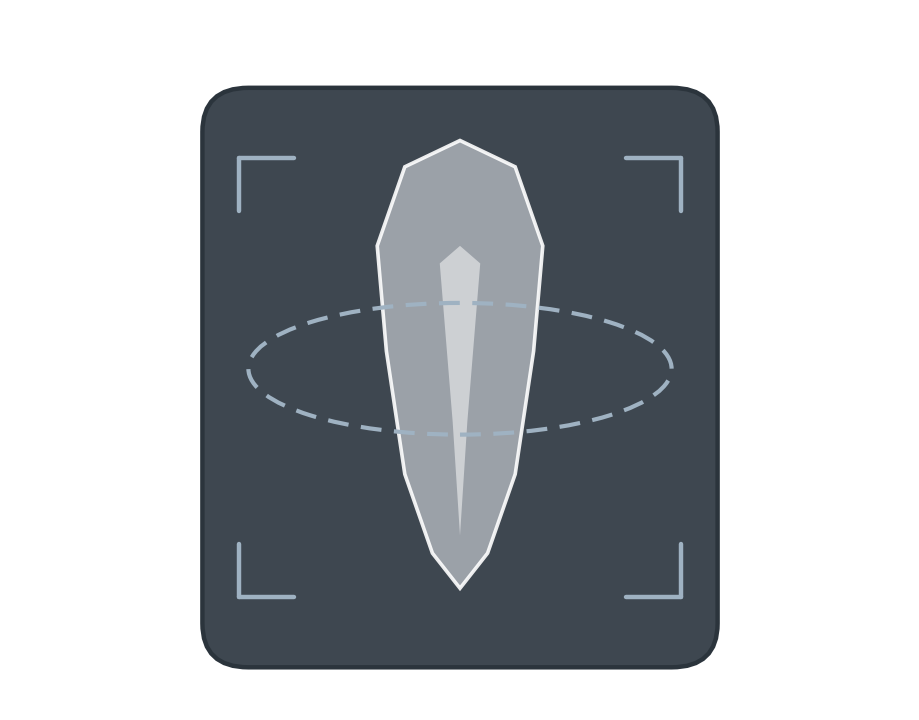
A 3D scan that shows your teeth, bone and nerves in fine detail.
Type
3D X-ray scan
Used for
Implants, surgery
Time
Quick
When
When 3D detail helps
Overview
A CBCT scan is a special X-ray that creates a detailed three-dimensional picture of your teeth, jawbone and nearby structures. It shows more than a standard X-ray when planning is complex.
It is often used for implants, difficult extractions and assessing nerves or sinuses. The scan is quick and uses more radiation than a standard X-ray, so it is used only when needed.
What to know
- Creates a detailed 3D image of your jaw
- Often used to plan implants and surgery
- Shows nerves, bone and sinuses clearly
- The scan itself is quick
- Used only when the extra detail helps
Common questions
How is it different from a normal X-ray?
It gives a 3D view, showing depth and structures a flat image cannot.
When is it needed?
Often for implants, complex extractions, or checking nerves and sinuses.
Does it take long?
No. The scan itself usually takes well under a minute.
Is there more radiation?
Yes, more than a standard X-ray, so we use it only when it helps.
Do I need to prepare?
Usually not, though we may ask you to remove metal items like jewellery.
Related topics


Dr Rick Iskandar · Reviewed June 2026