Restorative & Tooth Problems
Structurally compromised tooth
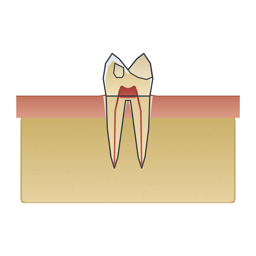
A tooth weakened by decay, cracks or large fillings.
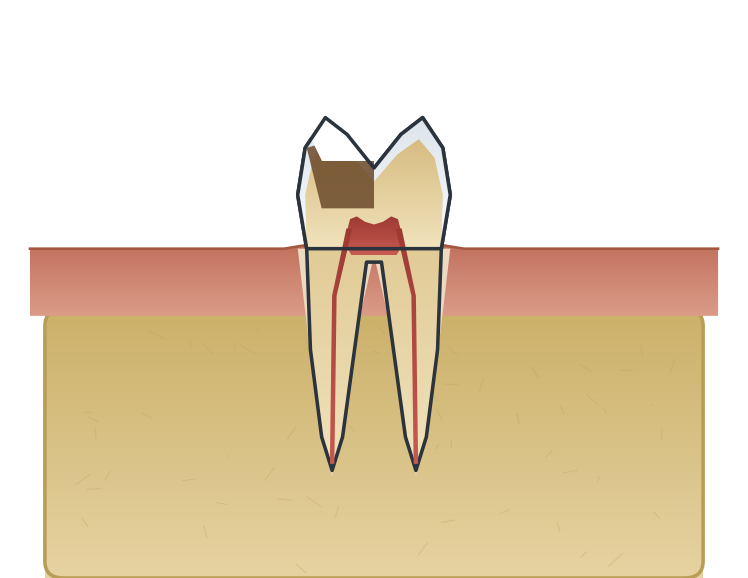
Problem
Weak, broken-down tooth
Causes
Decay, cracks, big fillings
Risk
Breaking
Protection
Crown or onlay
Overview
A structurally compromised tooth is one that has lost a lot of its natural structure, often through repeated fillings, decay, cracks or a previous root canal.
Less natural tooth means a higher chance of breaking. The aim is to protect what remains, often with a crown or onlay, so the tooth can keep working.
What to know
- Has lost a lot of natural tooth structure
- More likely to crack or break under pressure
- Often follows big fillings or root canal
- A crown or onlay can protect it
- Saving the tooth is preferred where possible
Common questions
Why is my tooth at risk of breaking?
Each repair removes some natural tooth. With less structure left, the tooth becomes weaker.
Why a crown instead of a filling?
A crown wraps over and supports the whole tooth, which a large filling cannot do as well.
Can the tooth still be saved?
Often yes. The plan is to protect what remains. Sometimes removal is the better long-term choice.
What if a root-canal tooth is weak?
Back teeth after root canal are often crowned, as they can become brittle and crack.
Related topics
Dental crown
A custom cap that covers and protects a damaged or weakened tooth.
Cracked tooth
A crack in a tooth that can cause pain when biting or with hot and cold.
Post & core / build-up
A support built inside a root-treated tooth to hold a crown securely.
Inlay / onlay
A custom-made filling that repairs a tooth when a normal filling is not enough.
Dr Rick Iskandar · Reviewed June 2026