Restorative & Tooth Problems
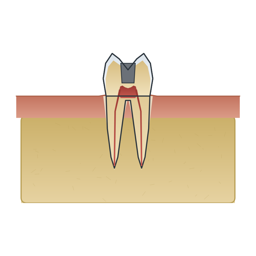
Cracked / failing filling
An old or cracked filling that no longer seals or supports the tooth.
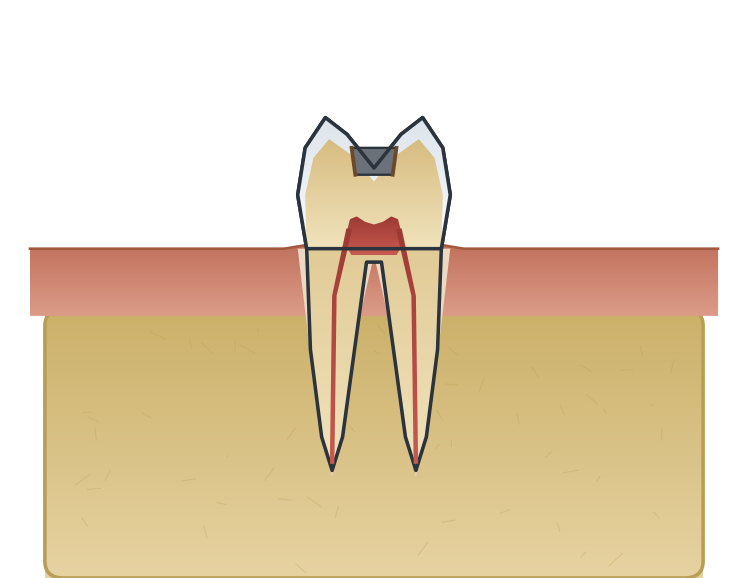
Problem
Worn or leaking filling
Signs
Sensitivity, rough edge
Risk
Decay underneath
Fix
New filling or crown
Overview
Fillings do not last forever. Over time they can crack, wear down, or pull away from the tooth, letting bacteria seep underneath.
A failing filling may cause sensitivity, a rough edge, or new decay around it. Replacing it early helps protect the tooth and avoid bigger problems.
What to know
- Old fillings can crack, leak or wear over time
- New decay can form around a worn filling
- Sensitivity or a rough edge can be early signs
- Replacing early helps avoid bigger repairs
- Sometimes a crown is needed instead of a filling
Common questions
How do I know a filling is failing?
You may notice sensitivity, a rough or chipped edge, or your dentist may spot it at a check-up.
Why replace a filling that does not hurt?
Decay can grow silently underneath. Replacing it early is simpler than treating a larger problem later.
Will I always need a bigger filling?
Not always, but the repair is often slightly larger because more tooth is involved.
Could I need a crown?
If a lot of tooth is missing, a crown may protect it better than another filling.
Related topics
Tooth-coloured (composite) filling
A tooth-coloured filling that repairs a tooth and blends in naturally.
Cracked tooth
A crack in a tooth that can cause pain when biting or with hot and cold.
Structurally compromised tooth
A tooth weakened by decay, cracks or large fillings.
Replacing silver (amalgam) fillings
Swapping old silver fillings for tooth-coloured ones.
Dr Rick Iskandar · Reviewed June 2026