ExploreTreatmentstheconsent.app
Oral Medicine & Pathology

Geographic tongue

Harmless map-like patches that move around the tongue.

✓ Clinician-reviewedReviewed June 20262 min read
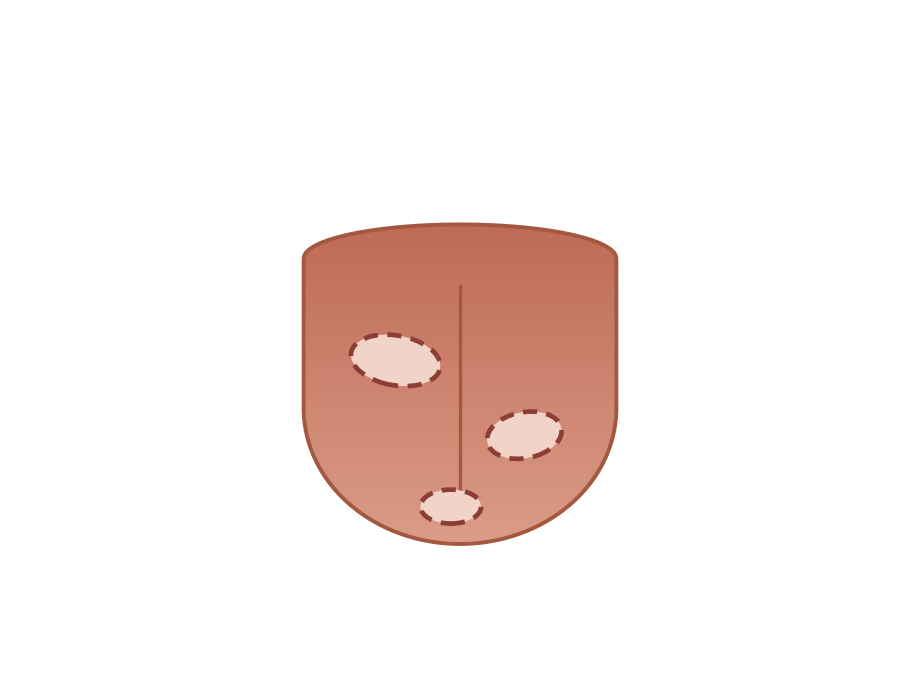
Illustration: Geographic tongue
What
Benign, map-like patches
Pattern
Patches move and change
Contagious
No
See us if
A patch stays fixed >2 weeks

Overview

Geographic tongue is a common, benign condition where smooth red patches with pale borders appear on the tongue's surface, looking a little like a map. The patches change shape and position over days to weeks — one area heals while another appears — which is the giveaway that distinguishes it from things that stay put.

It is not an infection, not contagious, and not linked to cancer. Most people have no symptoms; some notice stinging with acidic, spicy or salty foods while a patch is active. The cause is not fully understood, though it runs in families and can flare with stress; it is also more common in people with psoriasis.

No treatment is needed beyond reassurance and avoiding trigger foods during flares. The rule that always applies: a tongue patch that does not move or heal within two weeks is a different problem and should be examined.

What to know

  • Harmless and common — a look, not a disease
  • Patches migrate: the pattern this week differs from last week
  • Can sting with spicy, acidic or salty food during flares
  • No treatment needed; triggers can be avoided during flares
  • Any fixed patch lasting more than two weeks needs examination

Common questions

Is geographic tongue caused by a vitamin deficiency?
Usually not, though a tongue that is uniformly sore, smooth or pale can reflect iron or B-vitamin deficiency — which is a different appearance. If there is doubt, a check (and sometimes a blood test via your GP) sorts it out.
Why does my tongue sting with certain foods?
Active patches have a thinner surface where the little papillae have flattened, so acidic, spicy and very salty foods contact nerve endings more directly. It settles as the patch heals.
Could it be oral thrush instead?
Thrush typically shows creamy patches that wipe off leaving a red base, often with soreness. Geographic tongue's patches don't wipe off and drift over time. They can look similar to an anxious eye — which is what we're here for.
How do I know it isn't something serious?
Movement is the reassuring sign: geographic tongue never stays still for long. Anything fixed — a persistent patch, lump, ulcer or white/red area lasting beyond two weeks — should be examined promptly.
Dr Rick Iskandar · Reviewed June 2026
Every page is written and reviewed by practising clinicians.
Dr Rick Iskandar · Reviewed June 2026 · Sources: Australian Dental Association, specialty college guidance
✓ Clinician-reviewed

General information — not a substitute for personal advice from your dental team. Please discuss your individual situation with your dentist.

© Dr Rick Iskandar 2026 · Powered by theconsent.app