Oral Surgery & Extractions
Wisdom tooth removal
Removing wisdom teeth that are impacted or causing problems.
Why
Impaction, pain or infection
Visit
One procedure
Anaesthetic
Local, sedation or GA
Recovery
About a week
Overview
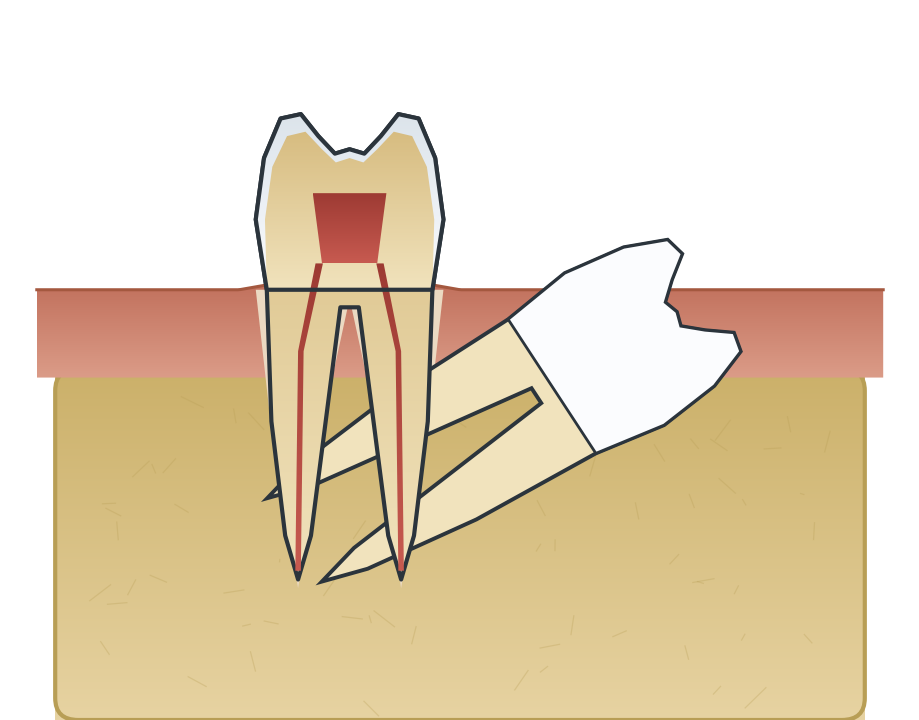
Wisdom teeth often lack the room to come through properly and become impacted — trapped against the tooth in front or under the gum. When they cause pain, decay, gum infection or crowding, removing them resolves the problem and protects the neighbouring teeth. Healthy, fully-erupted wisdom teeth that you can clean can usually stay.
Common questions
Do all wisdom teeth need to come out?
No. If a wisdom tooth is healthy, fully through and cleanable, it can often stay. We remove them when there's a clear problem or a high risk of one.
What does the procedure involve?
Depending on position, it ranges from a simple extraction to a surgical one, where a little gum and bone is moved to lift the tooth out. Done under local anaesthetic, with sedation or general anaesthetic available.
What is recovery like?
Expect swelling and discomfort for a few days, peaking around day 2–3, then improving. Soft foods, cold packs and the pain relief we recommend make it much easier.
What are the risks?
Bleeding, swelling, dry socket and infection are the common ones. For lower wisdom teeth there's a small risk of temporary (rarely lasting) lip or tongue numbness, which we assess from your X-rays.
Having this treatment?
See your step-by-step journey →
Dr Rick Iskandar · Reviewed June 2026