Restorative & Tooth Problems
Abfraction lesions
A smooth, C-shaped notch at the gumline linked to heavy biting forces.
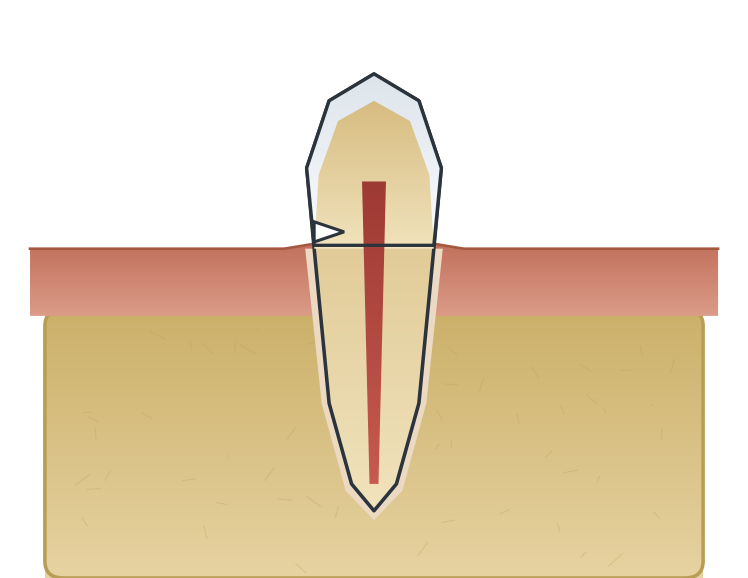
Where
At the gumline (tooth neck)
Shape
Smooth C-shaped notch
Linked to
Heavy bite forces & grinding
Treatment
Monitor, fill, or adjust the bite
Overview
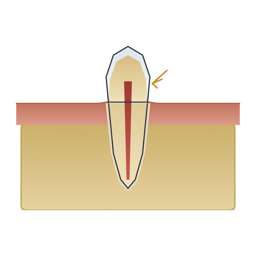
An abfraction lesion is a wedge- or C-shaped notch that forms in a tooth at the gumline. It is thought to develop when heavy biting forces repeatedly flex the tooth, causing tiny flakes of enamel and dentine to break away at its neck — the tooth's weakest point.
Abfraction often appears alongside toothbrush abrasion and acid erosion, and the three can be hard to separate. The notch itself is not decay, but it can be sensitive, collect plaque, and deepen slowly over time. Management ranges from simply watching it, to a small filling, to addressing the bite or grinding that drives it.
What to know
- A C-shaped notch at the neck of the tooth, not caused by decay
- Thought to be linked to the tooth flexing under heavy biting forces
- Often overlaps with abrasion (brushing) and erosion (acid)
- Can cause sensitivity to cold, sweet or touch
- Small fillings protect the area; a night guard may address the cause
Common questions
Is an abfraction lesion a cavity?
No. The notch is mechanical wear, not decay — but the exposed surface can still decay if plaque sits in it, so it is checked at each visit.
Why did I get one?
The leading explanation is repeated flexing of the tooth under heavy or uneven biting forces, often with grinding or clenching. Hard brushing and dietary acid can add to it.
Does it need a filling?
Not always. Shallow, non-sensitive notches are often simply monitored. Deeper or sensitive lesions are usually restored with a tooth-coloured filling.
Will it get worse?
It can deepen slowly if the forces continue. That is why we may also look at your bite, or recommend a night guard if you grind.
Can I prevent more of them?
A soft brush and light technique help, but the main lever is managing the biting forces — bite adjustment or a night guard where appropriate.
Related topics
Toothbrush abrasion
Tooth surface worn away by rubbing, often from hard brushing.
Tooth wear
Gradual loss of tooth surface from grinding, acid or rubbing.
Bruxism (grinding & clenching)
Grinding or clenching your teeth, often during sleep and without knowing.
Sensitive teeth
Short, sharp tooth pain from cold, heat, sweet or touch.
Dr Rick Iskandar · Reviewed June 2026