Prevention, Hygiene & Lifestyle
Flossing & interdental cleaning
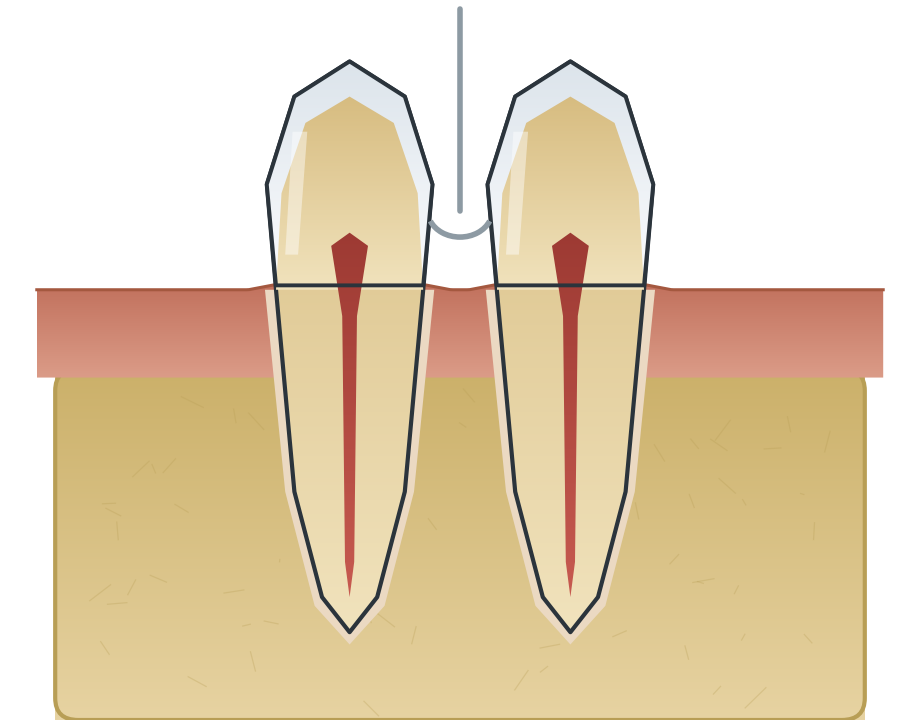
Cleaning between your teeth each day reaches the spots a brush cannot.
How often
Once a day
Tools
Floss or brushes
Time
A few minutes
Reaches
Between teeth
Overview
A toothbrush cannot reach the surfaces where teeth touch. Cleaning between them once a day removes plaque from these hidden areas.
Floss, interdental brushes or a water flosser all work. The best choice is the one you will use every day.
What to know
- Clean between teeth once a day
- Reaches plaque a brush cannot
- Floss, interdental brushes or water flossers all help
- Gentle technique avoids cutting the gums
Caring for it
- Use about a forearm's length of floss, or a clean interdental brush.
- Guide the floss gently between two teeth, never snapping it down.
- Curve it into a C-shape against one tooth and slide it under the gum.
- Move it up and down a few times, then repeat on the next tooth.
- For interdental brushes, choose a size that fits without forcing.
- Clean every gap, including behind the back teeth.
- Some bleeding at first is common; it usually settles within a week or two.
Common questions
My gums bleed when I floss. Is that bad?
A little bleeding is common at first. If it lasts beyond two weeks, tell your dentist.
Floss or interdental brushes?
Interdental brushes suit larger gaps; floss suits tight spaces. Your dentist can advise.
Are water flossers as good?
They help a lot, especially around braces and bridgework. For natural teeth they work best alongside floss or interdental brushes; around implants a water flosser or interdental brush is preferred, as floss can damage the gum's seal to the implant.
When should I do it?
Any time that you will keep up daily. Many people find before bed easiest.
Related topics
Brushing technique
Brushing twice a day removes the plaque that causes decay and gum disease.
Fluoride
Fluoride strengthens enamel and helps protect your teeth from decay.
Gum disease (periodontitis)
A bacterial infection of the gums and bone that support your teeth.
Check-up & clean (routine visit)
A regular visit to check your teeth and gums and remove built-up plaque.
Dr Rick Iskandar · Reviewed June 2026