What
Exposed roots
Common cause
Hard brushing
Symptom
Sensitivity
Treatment
Monitor or graft
Overview
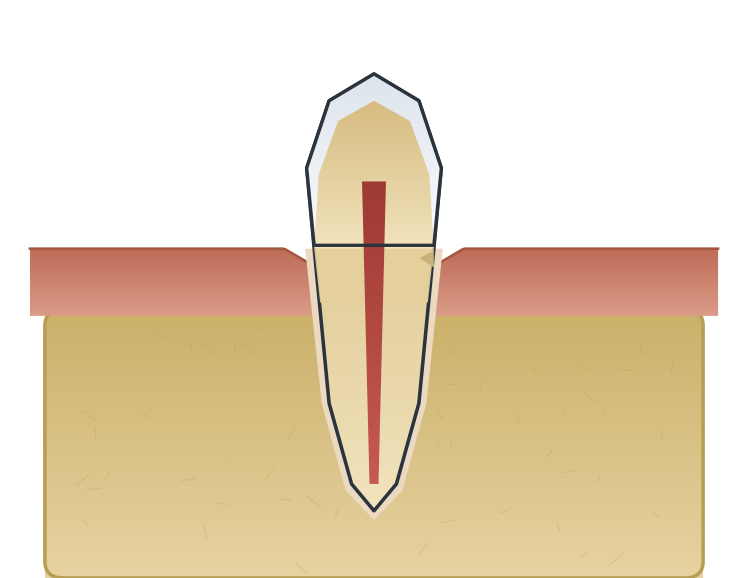
Receding gums means the gum edge has pulled back, exposing more of the tooth or its root. This can make teeth look longer, cause sensitivity and, over time, lead to root decay.
Common causes include gum disease, brushing too hard and grinding. Mild recession is often just monitored, while more advanced cases may be helped with a gum graft.
What to know
- Gum pulls back and exposes the root
- Can cause sensitivity to hot and cold
- Often from hard brushing or gum disease
- Mild cases are usually monitored
- A gum graft can treat advanced recession
Common questions
What causes gums to recede?
Common causes are gum disease, brushing too hard, grinding, and thin gum tissue. Sometimes it runs in families.
Will my gums grow back?
Receded gum does not usually grow back on its own. Treatment aims to stop it worsening and, if needed, cover the area with a graft.
Why are my teeth sensitive?
The exposed root is softer and more sensitive than the crown of the tooth, so hot, cold or sweet things can cause a twinge.
How can I stop it getting worse?
Brush gently with a soft brush, keep your gums healthy, and treat grinding. Your dentist can check your technique.
When is treatment needed?
Mild recession may just be watched. A gum graft is considered if there is sensitivity, decay risk, or ongoing recession.
Related topics
Gum grafting
Adding gum tissue to cover exposed roots or strengthen thin gums.
Gum disease (periodontitis)
A bacterial infection of the gums and bone that support your teeth.
Sensitive teeth
Short, sharp tooth pain from cold, heat, sweet or touch.
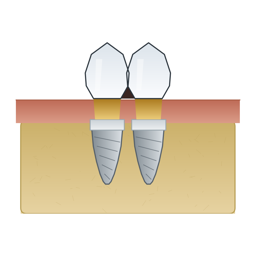
Black triangles around implants
Small dark gaps that can appear between teeth or implants at the gumline.
Dr Rick Iskandar · Reviewed June 2026